by AnnElise | Jul 19, 2014 | Arizona, environment, lifestyle, nature, survival & ecology, travel & tourism
 Ich hätte es mir gleich denken können: der Sommer kommt ja wieder. Zu spät für die Flucht nach drüben. Obwohl—bei uns in Arizona geht der Sommer eigentlich nie ganz weg, auch nicht im Winter. Deswegen kommen dann die Snow Birds aus Iowa, Minnesota und Nebraska. Aber leider ist ihr alter Schnee dann unterwegs schon geschmolzen. Von Rodeln keine Spur, denn in Arizona brodelt der Asphalt.
 Jetzt im Juli ist es grad so schön warm, dass du dir auf der Kühlerhaube (welch eine Fehlbenennung) ein Spiegelei braten könntest. Hundert Grad (37 C) sind da nichts, das haben wir mehr als fünf Monate lang. „It’s a dry heat“, eine trockene Hitze, scherzen wir Arizonier dann mit unseren Touristen. Obwohl, wenn das Thermometer auf knusprige 115 (46 C) klettert, dann sind wir gespannt, ob es keinen Knacks kriegt.
Mir bleibt die Luft weg, wenn ich aus dem gekühlten Haus in die kochende Garage geh. Die Spucke ist mir schon längst vertrocknet. Wenigstens habe ich Ofenhandschuhe für die Autotürgriffe dabei, weil die auch schon glühen. So, erst lass ich mal 10 Minuten den Motor und die Kühlung laufen, damit ich das Steuer anfassen kann. Es ist kein Scherz, schon viele Babys und Haustiere sind in solchen Folteröfen gestorben. Und nur Vollidioten bestellen sich in Arizona eine schwarze Innenausstattung fürs Auto. So meschugge bin ich noch nicht. Bloß nichts drin liegen lassen, was schmelzen oder explodieren könnte.
Aber was kannst’ machen? Bei so einem Sauwetter jagt man keinen Hund mehr auf die Straße. Hab ich Fieber? Da lebt man wie im Dämmerzustand und Unfähigkeit zu irgendwas so vor sich hin, wie unter eine Glasglocke. Klimakühlung im Haus, im Auto, im Mall, von der Natur keine Spur, lieber nicht, die ist grausam heiß.

Sculpture by Heloise Crista at Taliesin West
Mein Garten ist schon arg vertrocknet trotz Sprinkleranlage. Die Tomaten sind Dörrobst. Sogar den Kakteen wird es zu heiß. Erst als ich die Schattensegel über den Kaktusfeldern im Botanischen Garten wahrnehme, verstehe ich, warum meine Aloepflanze so traurig aussieht. Da brennt es direkt runter auf den Steingarten, gegrillte Aloe also.
Sogar zum Baden ist es zu warm. Im öffentlichen Pool schwimmt man herum wie ein Wienerwürstel in der Erbsensuppe—und das Wasser sieht auch so aus. Nein, danke. Auf dem Salt River kann man sich in einem Autoreifen treiben lassen, nicht schlecht. Aber am besten mit T-Shirt und Trainingshose bedeckt, sonst gibt’s rote Garnelen zum Abendbrot. Solardach haben wir zwar, aber die Zellen kommen mit dem Strom für die Kühlung nicht mehr nach. Kann man nur hoffen, dass das bisschen extra Schatten unter den Platten die Sonne etwas bremst. Auch dem „Sonnendach“ wird die Hitze zu viel.

Barracks at Goldfield Town
Kurz gesagt, Arizona ist ein Winterparadies. Im Sommer gibt es genau drei verschiedene Temperaturen: „hot“, „hotter“, und „bloody hot.“ Arizona ist der einzige Staat, der keine Sommerzeit hat. Wieso? Weil wir ignorieren den Sommer ganz einfach. Deswegen kriegt er auch keine besondere Zeit. Ganz im Gegenteil sind wir froh, wenn die Sonne abends schnellstens wieder abhaut. Wir haben angeblich auch einen „Monsoon“, aber alles was dabei herauskommt sind Blitze und Staubstürme.  Trotzdem hat Arizona ganz herrliche Regenbögen—einmalig auf der Welt, weil ganz ohne Regen. Ich glaube wir machen die mit Panavision, oder so ähnlich wie ein Feuerwerk.
Na gut, am Wetter kann ich nichts ändern—aber meine Einstellung schon. Jetzt habe ich folgendes probiert: ich habe mein chinesisches Schneesturmposter anmeditiert und mir vorgestellt, es ist Winter. Und es hat funktioniert. Es war wie Weihnachten. So habe ich nichtsdestotrotz gleich Schmalznudeln und Plätzchen gebacken. Ignorieren ist das Beste, was man tun kann, wenn an der Lage nichts zu ändern ist. Aber manchmal wird’s mir trotzdem ganz “Chihuly.”
by AnnElise | Jul 6, 2014 | cooking, recipes
 No time for baking? Try these Lemony Cupcakes here. My kids can make them in a jiffy from scratch. (Yeah, right, IMAGINE, they are under the icing. We had the color stuff left over from a cake class and got into rainbow color “play.” Move over, cake boss!)
This cupcake recipe (forget the icing) has only 7 common ingredients—which you already have in your pantry or fridge. It is no secret: these lemony cupcakes taste delicious for the generous “splurge” of butter. So don’t overdo the eating. They are a special treat.
 By the way: Never mind the “royal” icing on our creations (photos). We went a little crazy. For a healthier outcome, just dust your cupcakes with a little powder sugar—although there is obviously no limit to “creative” decorating.
INGREDIENTS:
- 200 g butter (1 ¾ sticks)
- 200 g sugar
- 4 eggs
- 1/2 lemon’s grated peel
 2 lemons’ juice (or 1 only, but add a squirt of milk)
- 200 g flour
- 1 tsp. baking powder
- a “shot” of milk, if needed
PREPARATION:
- Cut up the butter, warm it slightly so that you can beat it easily with a whisk or electric mixer.
- Add in the sugar, eggs, lemon juice, whisk until you get a creamy, fair batter.
- Slowly whisk in the flour and baking powder to a creamy consistency. Add milk, as necessary. Dough should “rip” from the spoon and pile up gently in the paper cups.
- Fill the paper lined cupcake pan equally with 2 spoons full of batter. This makes about 20 cupcakes.
- Bake the cupcakes at 350F for 30 minutes, let cool for 1 hour, then decorate to your heart’s content.
 NOTE: The recipe for “Zitronenküchlein” is from the book “Kinder-Geburtstagstorten”. In Germany even kids know about “good eats.”
HAVE FUN AT IT! CREATE SOME EDIBLE ART. OCCASIONALLY . . .
by AnnElise | Jun 15, 2014 | activism, education, social interest
 UP Deserves Your Support
Because I just went to the Unlimited Potential graduation party, and I saw that the programs are effective and have changed lives. Ask Maria Angeles (below).
I don’t ever want to miss Unlimited Potential’s End-of-the-Year Celebration. Why? I have never seen any happier people than at that party. The sweet taste of learning success produces grand smiles on these graduates’ faces. More than sixty women and men, and about 20 preschool children, rejoiced in their education awards.
 Brooks’ School’s multipurpose room teemed with festively dressed graduates and their families. They were not the typical students—poverty-level moms, day-laborer fathers, or low-income Latinos from many walks—but they stuck through one year of English and Life Skills instructions.
For the happy occasion, the women had chosen to color-coordinate their outfits: The first-year students dressed in teal tops and black bottoms, the second-year class in blue tops, and the evening students in all-black. The littlest of the Unlimited Potential program wore costumes in yellow, like little chicks just hatched. Performing their songs, rhymes, and dances, they stole everybody’s heart.
 This celebration was a concerted effort. Participants had put their planning and cooking skills together and provided all of the catering themselves. Enchiladas, posole, rice, you name it, this party stimulated the senses with tasty aromas.
Sandra Amarillas, the first-year teacher, shared: Daytime classes had excellent attendance, but evening course students struggled after a hard day’s work. Struggles are surrounding many of these participants: making ends meet, at a loss about children’s school progress, rejection on the job quest, medical challenges, and many other obstacles. Yet Unlimited Potential’s equal opportunity education, support, and resources were an invaluable experience to them. As in previous years, participants were seriously committed and eager to learn.
What does Unlimited Potential do, what does it mean? Education is a basic human right, but too many individuals are excluded from this privilege. So UP’s program reaches out to a segment of the working-poor, predominantly Latino population in Phoenix to provide them access to knowledge and life skills.
It takes a whole village to raise a child. Yes, but it also takes parents with a keen awareness about how to guide their children to build a better future for themselves and all of us. Education makes individuals more productive and societies better.
 “Thank you, thank you, for helping my mom!” a man spontaneously addressed me. He came up to me because he noticed that I was taking my volunteer photographer pictures. It felt good to be thanked, but I said, “Not me, thank these teachers here. They made it all happen.”
The man dressed in a guyabera shirt was Ivan Valdez. “My mom learned English so well and many other things. She was able to get a job. She is now working in manufacturing.” Maria Angeles felt very accomplished about her change in life.
And that made me feel good as well.
by AnnElise | Jun 8, 2014 | Arizona, art, travel & tourism
 NOTE: No disrespect intended towards cultures ancient or new, but rock art makes my imagination fly.
 When you hike out here in the scenic Sonoran Desert and farther beyond towards New Mexico, you may stumble upon traces of ancient art. On slabs of rock, protected overhangs, or inhabitable caves, humans of times long gone have immortalized themselves on petroglyphs: ancient “graffiti” of the Southwest?
When I come across such rock art, I can’t help but wonder. What were the people of old thinking? Anasazi, Hohokam, and their descendants have depicted wildlife such as stags, turtles, snakes, and birds in prominent places. Mixed in are symbols, concentric circles or spirals, arrows, jagged lines like lightning, and interesting geometric patterns. Of course the human figure always plays an important role too. We can guess from the figure’s attributes what their rank and role may have been. Only guess we can.
 I have always been fascinated by petroglyphs. When I look at these sketchy and attractive ideas on the rock in front of me, my mind goes on a time travel. When I look at them long enough, I feel a presence. Or more present about myself?
Many anthropologists have studied petroglyphs for their significance. Life-style, rituals, worries, and worship might be deduced from such stick-figure-like images. It must have been quite cumbersome to chip the images out of the granite; limestone seemed an easier medium for carving. No matter what rock, I conclude that the ancient artists were persistent and their pictures were important to them. It also seems that I can sense the ambition for skilled expression to make the image just “right.”
 That makes me wonder even more. Did the ancient ones have “professional” petroglyph makers, specialist who made art for money? Was “petroglyphing” a rogue craft or an underground culture? Were some images chiseled for magic purposes to ward off evil spirits, make the crops grow, or smash the enemy? Was this a calendar documentary to leave a legacy, the history of the tribe? Maybe. How can we know? And then a crazy thought strikes again: What if the ancient ones were just having fun? (Or the elders might sent the troubled individuals for some rock art therapy. Or told the kids, now go get busy, chip some rocks, and draw me a picture.)
 Some very strong images have conquered merchandising and government. The Kokopelli flutist, a fertility and growth symbol, has become a mainstream icon. The sun symbol is gracefully adorning the heart of the New Mexico flag. So there must have been some lasting value to these plain engravings. Petroglyph art feels alive and buzzing today. Many hikers such as I go out looking for them to get lucky once in a while.
Our closest petroglyphs are just 30 minutes away in Gold Canyon at the end of the Hieroglyphic Canyon Trail (1 hour hike). Where the trail peters out, we stop in the canyon by the gulch for a rest. It’s such a scenic place, with a view all the way to Phoenix. On the sunny side of the canyon, we marvel at a tapestry of petroglyphs all the way up the rock wall. How did they get so high up there? This idyllic place, the end of the road (?) or a dating cove (?), must have been enjoyed by native people hundreds of years ago just as much.

 Another time we toured the Palatki Heritage Site nearby Sedona. This protected cove nestled into an overhang of the Mogollon Rim (mud-brick cliff dwellings nearby) shows many-layered styles of petroglyphs, some perhaps 2000 years old, others superimposed by modern vandals. Defacing ancient art is obviously a despicable act; however, you might see it also as a “response” and “dialog” with artists across ages. Think ahead 1000 years; today’s senseless scribbles might become of interest to future researches. (Right now, they are deplorable.) At Palatki you can see “black” petroglyphs located above a popular fire place. The smoke of ages has adhered to the pictographs, since the rock surface was eagerly absorbing the sooth on the roughened up surface.
 Bandelier Monument in New Mexico near Los Alamos is a fascinating site of ancient pueblo/cliff dwellings and petroglyphs. The site was already abandoned when Spanish/European settlement arrived.
  What you can witness there are the remainders of an elaborate architecture and society including plenty of pictographs. A ranger pointed out the drawing of a macaw high in the cliffs. It is assumed that these birds were traded live from Central America. As we modern people try to piece together ancient cultures, we repeatedly discover that these societies were far from “primitive.” So, go see some rock art real soon. It will make you wonder, I hope.
You may want to start your tour with famous petroglyphs “by the roadside” in Albuquerque, Petroglyph National Monument, more Information here.
by AnnElise | Jun 2, 2014 | cooking, India, recipes
 Aloo gobi, cauliflower with potatoes, is one of the most popular Indian dishes. Yet there are a gazillion variations of it. You can’t go wrong with aloo gobi. Just about everyone likes it. Even moviemaker Gurinder Chadha (Bend It Like Beckham) had a try at it. See the link at the bottom of the story.
My aloo gobi version is not yet Indian housewife approved. It is based on my sister-in-law’s excellent coaching and my very own desperate knack for convenience and “saving” dishes. I like to cook “all in one pot” and still be creative. Add mustard seed and hot chilies, you’ll get a southern flavor; spice it up with cumin and garam masala, definitely a northern note. Whatever you do, don’t add much water!
NOTE: My aloo gobi is a stir-fry-style recipe for a large wok or skillet. Be prepared and start about 60 minutes before mealtime. Here we go:
WASH & CUT VEGETABLES:

- ½ cauliflower, cut small rosettes/pieces
- 3 medium potatoes, small cubes (1 cm-1 inch)
- 3 tomatoes, diced
- 1 onion, diced small
- 1 inch ginger, grated or chopped small
- 3 cloves garlic, grated
SEAR THE SPICES: heat
- 2 Tbs. vegetable or olive oil in large wok on high, don’t burn; add
- 2 Tbs. channa dal (= lentils) to fry for 3 minutes (optional for “bite” and texture)
- 1 tsp. mustard seed to crackle and
- 1 tsp. cumin (jeera) to crackle
- 3 dried hot chili peppers to sauté
NOTE: You could start off with the traditional onion/chili/ginger paste as a base. Adding freshly chopped Serrano peppers or red pepper flakes in the middle of the process works just as well. I prefer to use small ginger pieces as “bursts of flavor”.

Cauliflower, potatoes, chili

Onions, turmeric, garlic

Tomatoes & salt
STIR-FRY PHASE: Lower heat to medium and add
• cauliflower pieces (longest to cook) and sauté 10-15 minutes
• potato pieces, sauté for another 10 minutes
• onions and ginger for 5 minutes
• garlic paste (2 min)
• 1 tsp. (½ tsp.) turmeric (haldi); stir until evenly distributed (3 min)
• tomatoes, stir until they start getting mushy (5 min)
• ½ tsp. garam masala (optional), stir-fry for 1 minute
• 1 tsp. salt to liking
• ¼ cup water (or none)
 FINISHING PHASE:
Put the lid on the skillet/wok and let the aloo gobi simmer (ca. 15 min) so that the cauliflower is cooked but firm to the bite. Shuffle it once in a while. Taste for texture towards the end.
Let this cool off for 5 minutes and transfer to serving dish. Garnish your aloo gobi with chopped cilantro. Add a sprinkle of lemon. Bon appetite!
Movie link: Aloo gobi
by AnnElise | May 20, 2014 | Uncategorized
 Wow! Pretty good guessing, and what imagination you have! But nobody got it quite right. Here is what you said:
- I can’t figure it out! I must know . . . What is it?? 🙂 — Julie
- Easy, you found your daughter’s nickname, short in the central pattern inside the circle. (You can send me one of your photos instead.) Happy Mother’s Day — Cecilia
- P.S.: Shaffiq thinks you saw the word ‘pray’. As a way to get closer to God. He also prefers one of your photo art.
- No idea. Here I am in the 18th century last weekend. — Russ
- The bark of a tree with somebody’s old initials carved in it? That’s what jumped to mind. Love your blog. — Kate
 We have no idea, though it looks like a moon-surface. Could also be old asphalt. Anyway, we will wait for your denouement. What’s the writing? – Herzlich, S+N
- Ne, keine Ahnung, help me out — Roswitha
- STELLAR ANSWER (but late): I would like to think that you captured a message from some interstellar spaceship, but I suspect the image is more mundane than that. Perhaps it is just a reflection on a street or sidewalk of some object from a car or house. It is very regular-shaped and almost looks like it has writing on it. — Rita
So I will help you all out. Here is the answer! The unknown pattern was from a heavenly “cyber” reflection on a Sedona sandstone table. Congratulations, Cecilia & Kate! Watch out for your prizes in the mail. You too, Rita!
by AnnElise | May 12, 2014 | art, India, travel & tourism

Can you guess the snap? I came across this picture amidst long forgotten snapshots. What the heck was I thinking or seeing? I strained my brain but without success. Later I scrolled down farther in my picture index and found the explanation.
What’s on the picture above? Guess the snap!
 The best guess (or the first correct answer) wins this absolutely fantastic, romantic, original Indian miniature painting. I brought it from one of my journeys to Jaipur. The image is 3 x 5.25 inches and matted in an 8 x 10 white archival mat. Such a lovely romantic scene deserves your best guess.
Miniature paintings are a very old traditional art, originating during the Mughal period in the 17th century. Miniature paintings were used as book illustrations. Antique miniatures can be very valuable. This art is kept alive by very skilled art guilds. Often the paintings are rendered on antique book pages surrounded with Farsi script. Although small, the paintings contain an incredible amount of detail, symbolism, and cultural expression. They always draw me in because I am excited about little treasures.
This charming miniature painting with the prince and the maiden can be yours. Please send me your answer in the comment box below or by e-mail until by Monday 12 noon (May 19).
Good Luck!
by AnnElise | Apr 29, 2014 | Arizona, writing
 I met Dan about seven years ago “on the job” for our local Up Close neighborhood newspaper. Dan had just co-authored and published a very interesting book FIND ME in collaboration with retired police officer Kelly Snyder. In Find Me, you have missing and—most likely dead—people being “read” through an international team of psychic investigators.
Bodies were located and cases solved with the help of these rather unconventional investigative methods. Dan’s psychic specialty is map dousing. He asks the universe “yes-or-no” questions while dangling a pendulum over a map. But he also helps search-and-rescue-teams canvas rough terrain with a passion. Dan Baldwin: ghostwriter, adventurer, and medium.
 Find Me wasn’t Dan’s first book. But it was probably the first one published with his name on the cover. Dan is a ghostwriter of about 50 titles with other people’s name on them. “As long as they write my name on the check, I am all fine with it,” he jokes in his trademark wry humor.
Since those seven years ago, Dan has published 3 Westerns (CALDERA, CALDERA, A MAN ON FIRE, TRAPP CANYON), 2 murder mysteries (DESECRATION, HERESY), a novel (Sparky and the King), and a movie script in addition to his work for hire. Speaking about prolific, Dan can shake out a good story in about an hour. And he still takes the time to tutor novices like me whose books take on average 10 years.
 Once in a while, Dan disappears into the Superstitions wilderness or other epic landscape. He gets ideas out in the desert, where he explores collapsed gold mines, follows the Apaches’ trails, or chances on potsherds and tragic wagon ruts.
And then he writes a book again. Some settings are brawly, ribald Western towns, other scenarios may chase across an archeologist’s field of dreams. And all these colorful worlds are quite tangible and informed, like a painted movie backdrop. Now, I am having trouble with some of Dan’s characters. There are a few awfully evil types, outright vicious villains in his books. Not the typical manslaughter cases but totally rotten demises. I can’t believe that Dan wrote them. He is the nicest guy.

 “I wrote one of the bad guys that had it coming after my dentist,” Dan jokes. He delighted in the virtual payback opportunity, and the dentist didn’t mind. It seems? Wait, maybe Dan will find out at the next sacamuelas appointment.
Dan likes to cultivate a solid “bad boy, best friend” reputation. He does have quite a few friends, one of them Harvey, and—no—he is not imaginary. Many in his writers circles, I guess, like Java mornings, plain, black, and strong.
One day, a bunch of us (Georg, my German mystery writer friend, his wife Angelika, and I) went hiking with Dan. He wore his impressive buck-skinner knife on the belt just in case a bear might show. Of course we felt fully protected, or were we?
 As the case may be, Dan has been a good sport on a couple of joint projects. A couple of times, he and I had a guest appearance in an elementary school, showing the kids the real world ropes of riding, oops, writing. Just one word after another, but with outline please. And make a good lead sentence to set the tone for the story.
The kids were mightily impressed with Dan’s hat and library full of self-written books. I taught them a bit of journalism. Together we made an excellent desperado author pair. Only that he spoke the more popular language. Although, can he write in German too? I don’t think so, Danny Boy.
 Now what other claims to fame must be mentioned? Dan has a website, writes a blog, and is a board member of the Society of Southwestern Authors. And as we speak he might be churning out another braggardy lawyer profile for a trade journal or indulge in a Playboy bunny’s memories. There is no telling with what Dan will do next. Oh, suspense!
 Contact Dan at baldco@msn.com
by AnnElise | Apr 26, 2014 | Uncategorized
 This article is for entertainment purposes only. Author is not responsible for diagnosis or therapy misadventures, but hopes that the information might be somewhat helpful. For solid proven advice, go to www.chadd.org
You just got your diagnosis, which you long suspected, that your third-grader has ADHD. First, sit back, relax, and relocate your sense of humor. You are in it for the long haul. ADHD won’t go away from pills or therapy.
Hyperactivity, attention problems, and control issues will wax and vane, but ADHD may also spark a technical or artistic talent through hyper-focusing ability. Instead of dreading the battles with your 10-year-old “wind-up toy,” there are a number of things you can do to help everybody survive.
One decision will ultimately be up to each parent: drawing the line between the child’s artistic individuality and common sense interventions. Potentially, your son might be another Albert E. or a Steve J. But can you stand by long enough to find out?
 As a parent, you may sometimes feel like a challenged lion tamer or a useless parrot, not really like a “natural” authority figure. Perhaps you may lose your temper just as often as your five-year-old—all while your child is simmering in frustration with you (“nobody understands me”). Here are some ideas to manage your daily family life. ALTHOUGH all of this may sound authoritarian (yeah, avoid letting the child run the show), we need to be aware that the ADHD child is not doing tantrums on purpose. ADHD makes them lose control via short-circuited neurons and developmental lag.
- Sounds strange, but it is effective: Turn the child’s bedroom door lock inside out to prevent him from locking himself up and going ballistic in a tantrum.
- Post the rules of the house and the work/play timetables conspicuously in important locations. Then, as a parent in crisis, all you have to do is firmly point at the rules, not yell. The child will understand.
- Invent achievement games based on hit lists (good behavior points) and sh** lists (bad behaviors). Simply the act of grabbing a pencil to note down a “yell” or “potty word” or “argues”, may redirect the behavior. No doubt, the hit list will do its own desirable modification by dangling a child-selected carrot. BUT: Change up the game every several weeks. ADHD children get bored quickly.
- De-clutter the child’s room, the fewer toys the better. Allow building blocks, coloring pencils, and creative materials. Simplify the house, remove unsafe contraptions, tools or toys. Your child may be as inquisitive as she is clumsy.
- Organize clothing and school materials in bins that are labeled or color-coded. This will help the child learn cleanup methods and avoid arguments about not knowing “where to put that stuff.”
 Limit TV time stringently and use favorite shows as a bait to get homework done. Sometimes it takes that emergency of a show “coming up at 6:30” to write the book report. Limit electronic game time and the Internet. Why? Overuse of electronic contraptions will ultimately reprogram your child’s brain. And you don’t want those cartoons brandished on her memory.
- Enroll the child in a karate class or other physical activity. Karate is great because it emphasizes precision of moves, mind over matter, listening to instruction, politeness and waiting your turn. Sports are time wisely spent and the kid shakes off the excess energy. Sportspeople also learn to play by rules.
- Try out a medicine, definitely! Maybe the first dosage might not be an instant success, but it would be tragedy to have all involved suffer more frustration than necessary. It is entirely possible to maximize the benefits and minimize the dose.
- Consult with a therapist who helps sort out your family baggage with a clear mind. Emotionally charged parents may view persistent “ridiculous” behaviors as “incurable,” whereas a third party can bring some sense into these dynamics.
- Consider neuro-feedback therapy, to help the child sort out his or her impulses. ADHD children can’t read their own minds (limited executive function), but neuro-feedback helps them visualize that. The drawback: It’s expensive. After a certain age (10 years old) children learn to better manage their feelings.
- Pick the right school—a highly structured one—as partner. You don’t want your child flounder from frustration or ridicule but have him/her supported on diverse learning behaviors. You don’t need a state plan for some simple accommodations (let the child work standing up, allow more time, etc.).
- “Make” (or “gently force”) the child to progress with skills that they hate the most. Yes, that sounds awful, doesn’t it? Encourage him on piano practice, reading, all that “boring stuff” that wiggly kids shirk from. There is proof that neurons and abilities can be newly formed through persistent habits, as quoted from a Lumosity e-news: “…evidence suggesting that the brain’s abilities are in fact malleable and plastic. According to this principle of neuroplasticity, the brain is constantly changing in response to various experiences. New behaviors, new learnings, and even environmental changes or physical injuries may all stimulate the brain to create new neural pathways or reorganize existing ones, fundamentally altering how information is processed.”
Giving up on ADHD is not an option. The natural disposition of distractibility will always be there, but the behaviors can be self-modified so that the cognitive efforts become an automatic skill for success.
Keep your calm in crisis and preserve your sense of humor, parents! Dealing with ADHD requires relentless patience. No, you are not living with a “dog too old to learn new tricks.” He will learn it! Just takes longer. Have faith, and you will be the happier for it.
Train the child to form habits and routines for good behavior. These automatic habits will relieve the child’s brain from constant “executive decision-making stress” because the socially acceptable behaviors can be recalled automatically.
When there is one ADHD person in the family, all members are affected by it. Especially the early school years can be a trial and upheaval for family harmony. Use your smarts to navigate your social system for the benefit of all. It’s a lot of work and requires foresight. You might feel that you are creating your own, home-made institution around the symptoms to keep your family in balance. But the rewards will be great.
by AnnElise | Apr 9, 2014 | cooking, lifestyle, recipes
 It was one of those days when I had no desire whatsoever to slave behind the stove. Don’t misunderstand me wrong, I like to cook and be creative. But I was running out of time and energy (whisper, whisper, yes, cooking can also be a chore). So I winged the dinner and put the roast and side dishes to cook in one go.
WHAT YOU NEED:
- lean marinated pork loin
- heat-hardy vegetables (onions, carrots, bell peppers etc.)
- one potato for each guest
PROCEDURE:
- Set the oven to broil temperature
- Wash & chop the vegetables, put them in a disposable oiled pan together with the marinated roast. (Or season the roast with salt, pepper, & other spices yourself.)
- Wash & wrap the potatoes in aluminum foil.
- Put all the ingredients in the oven, broil the roast 10 min top and bottom, then reduce temperature to 380 F to cook for another 60 minutes.
- Add ca. 1 cup of liquid after broiling and during roasting in small batches (broth, water, beer etc.) and baste the roast with a brush occasionally.
- 10 min before serving, thicken the sauce with 1 Tbsp. cornstarch (mix starch with a little water) and add more seasonings to taste (cream, soy sauce, chili paste etc.), let the sauce cook and reabsorb the flavor.
PREP TIME: 10 min; COOKING TIME: 75 min
by AnnElise | Apr 3, 2014 | lifestyle
by AnnElise | Mar 26, 2014 | Arizona, lifestyle, social interest

Women Progress from Survival English to Self-Reliance
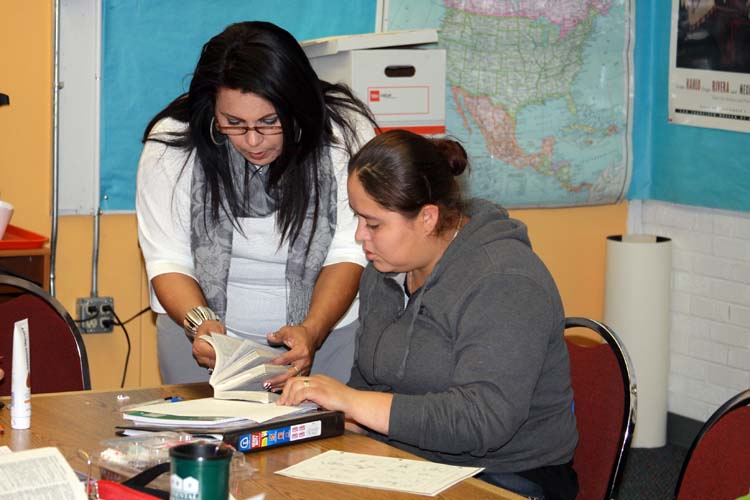
Everybody has a favorite charity. Mine is Unlimited Potential, a grassroots adult literacy and ESL program for the working poor in Phoenix. The teachers there perform little miracles every day, and not a penny is wasted. Nonetheless, UP is struggling and can use help of any kind. For the 2014 fall semester UP needs dictionaries and workbooks. Please buy one on GoFundMe! Thank you!
 Lidia, a program participant, brought me tamales one day, made from her special recipe con chiles y chocolate. (She was simply too nice, I might have mentioned my appetite—they were ricissimo.) In her tiny village Arroyo Tomate in Oaxaca, Mexico, Lidia grew up with 7 siblings and other family members in a rackety shack. There was no running water, the roof was leaking, and grocery shopping was a daytrip on foot to the nearest town. After she joined her husband in Phoenix, she felt helpless and alone. She spoke barely any Spanish—only her native Chinanteco—but she eagerly absorbed every new English word in Sandra’s class at UP. Lidia was a beaming lighthouse of gratitude.
 What a story! Only one of many. Most of the participants at UP come from a day laborer background and can barely afford medical care or school supplies. At UP these immigrant women learn their daily ABCs, while their toddlers and preschoolers follow their own structured programs. They want to improve their families’ lives.
Every time I visit a UP class, the passion and eagerness for learning is palpable. Profesora Sandra, who sat in a student chair herself some years ago, teaches survival English in her class via practical lessons about libraries, public transportation, parenting, nutrition and healthcare, talking with doctors and teachers, and community resources. So the women experience, “I am not alone any more.” The companionship at UP boosts their self-confidence. In the second year, Monica Garcia solidifies the basic skills with role-play scenarios to practice speech, grammar, civics and real life communication.
 Stop here, we—you and I—really had it good. We could rely on a lot of resources, help, education, and chances in our upbringing and professional track. So I thought I should share my education in publishing to put together newsletters and a website. That was about eight years ago. The women at Unlimited Potential have always impressed me. They are struggling, they have little education, they speak in broken English, but they seem grateful and undaunted. They are bravely learning to navigate American society. Here are several more reasons why Unlimited Potential has stuck on me.
- UP means “Unlimited Potential.” It also means “up.” Given the opportunity of education, anybody may flourish into an excellent person if they work hard. UP’s alumni have raised their families well, started businesses, and gone to college.
- UP’s founder, Jeanne Devine, impressed me with her boundless humanitarian spirit. She raised the UP programs courageously from a group of mothers surrounding their children’s Head Start program. The current Director, Lorraine Moya Salas PhD, is just as passionate a woman warrior.
- UP promotes education. Education is the best form of charity because it breaks the cycle of dependence. “Don’t give people a fish, but teach them how to fish.”
- UP is empowering women. As the husbands must chase after work, the family’s wellbeing and education rests in the women’s hands. I believe all women/mothers are nation builders, never getting enough credit.
- UP puts immigrants on the road to success. When you are new to a culture and society, you have to relearn everything: rules and laws, shopping, doctors, business opportunities, and community life. Immigrants have to work twice as hard.
- UP’s programs are in high demand. There is a 3-year waiting list for the core classes, and people who land a spot stay throughout the two years (85% retention rate). Many go on to GED exams and some continue in community colleges.
- UP’s teachers are great success stories. First-year-teacher Sandra, as well as children’s teachers Maria, Graciela, and Irene are graduates of the program.
- UP makes me feel happy and enriched after visiting there. The women are so inspiring in their quest for learning and improvement. I rediscover gratitude for what I have and know. I return enriched with motivation.
- UP is a small organization—no overhead, where everybody matters a great deal, and no pencils are wasted. “Where everybody knows your name.”
- UP makes me dream bigger to share more education. My next big dream: raise 100k per year to have 2 teacher salaries covered.
For now, it’s books for learning. If you would like to support UP’s program, buy a dictionary or workbook through Go Fund Me. Thank you for listening!
by AnnElise | Mar 10, 2014 | cooking, nutrition, recipes, Uncategorized

Rosemary spuds is simply the best potato recipe. Just be aware to back up one hour from serving time, put a tray of these into the oven and forget about them until dinner. The recipe is for 2 pounds of spring potatoes.
 Wash, brush, and quarter the small potatoes. Put them in a large mixing bowl. Drizzle juice from
- 1 large lemon over potatoes, add
- 2 cloves of grated garlic,
- 2 twigs of rosemary, snip it with scissors
- 2 or more tablespoons of olive oil
- salt & pepper to liking
and mix the seasonings thoroughly in. Bake the Rosemary Potatoes at about 400 F for 50 minutes or more. I like to get the skins a little toasty and crunchy. These potatoes are a true delight for all ages.

by AnnElise | Feb 24, 2014 | cooking, nutrition, recipes
 Never mind, potatoes are not fast. And yet they come at different speeds. What slows them down is mostly their peel. Who wants to mess with that? Read below the results of my speed tests. investigation. For additional helpful information about potatoes, go to GOODNESS UNEARTHED.

Oooh, these little potatoes are really fast
“Potato salad, a piece of cake,” my mom recently said—emphatically. Yeah, right! It’s a 90-minute procedure. Of course, while I am boiling the golden Russets, there might be a 40-minute window to write a blog. But potato salad requires a good amount of foresight. Still, potatoes are my favorite vegetable.
Let’s look at the average potato speeds, four medium-sized specimens at a time, from start to finish.
- BAKED POTAOES: 65 min
- Wash the potatoes, wrap them in aluminum foil, bake them.
- Handling: 5 min; Cooking: 60 min
- STEAMED POTATOES: 64 min
- Like baked, only naked (no foil), 1 minute less handling
 FRENCH FRIES: 21 min
- Wash/scrub, peel, cut into sticks, deep fry in oil
- Handling: 16 min; Cooking: 5 min
- HASH BROWNS: 35 min
- Wash, peel, cut into small cubes/sticks, fry in low oil
- Handling: 14 min; Cooking: 15-20 min
- SALT POTATOES: 30 min
- Wash, peel, cut into 1-inch pieces (or wedges), cook in salt water.
- Handling: 15 min; Cooking: 15 min
 MASHED POTATOES: 33 min
- About the same as salt potatoes; add 3 min for mashing and mixing
- POTATO SOUP: 35 min
- About the same as salt potatoes; add 5 min for mashing & additional ingredients
- ROSEMARY/SPRING POTATOES: 40 min
- Wash/scrub, cut wedges, season and toss in oil/lemon, bake
- Handling: 10 min; Cooking: 30 min
 POTATO SALAD: 93 min
- Wash, steam, peel, slice, add ingredients, mix
- Handling: 18 min; Cooking: 60 min; Cool off: 15 min
- POTATOES AU GRATIN: 70 min
- Wash, peel, slice thinly, layer, add cheese sauce, bake in oven
- Handling: 25 min; cooking: 45 min
Among all the options, the rosemary potatoes are my most flavorful favorite. Potato salad is for special holidays, but in such a case, we always make a lot.
One friend of mine cooks potato salad like salt potatoes. She cooks small pieces of potato for ca. 15 minutes. Then she tosses out the water and adds vinegar and oil etc. This would be a method worth trying.
NOW, the buck does not stop here! You could make potato croquettes, Kartoffelpuffer or nests, Zwurler, Schneiderl, Grösti, scalloped potatoes, “tiki” (Indian fried and stuffed cutlets) or finally even potato dumplings. I haven’t tried making most of these, because I figured they’d flunk my minimum speed requirement. Still waiting for the day to write a potato a speeding ticket.
So, what is your fastest potato? Send me a recipe or suggestion to the comment box. Perhaps we can get some of these potatoes up to speed.
by AnnElise | Feb 5, 2014 | America, art, lifestyle, nature
 I pulled into Buchners’ home-grown patch of Texas ranch turf. Through the ranch gates, I rumbled along the bumpy grooves of a pioneer wagon road into an island of wilderness. Prickly pears, mesquite, live oak, cholla cactus, cedar trees, and other greenery surrounded me.
It was a pleasantly warm, somewhat humid and overcast day, which gave the greens a stronger tint. I halted at the roundabout and shut off the motor. The deer briefly stared at my vehicle then continued grazing unperturbed. I took in the scenery.
 There stood a bicycle on my right by a group of trees. That just wasn’t like the Buchners to leave equipment sitting out in the wild. Must have been the boys. They have two very lively grandsons. But the ladder next to the bicycle was a little harder to explain. It wasn’t leaning against a tree or shed, just standing free, reaching up in the air.
“This piece is called Going Nowhere,” Helmut Buchner said. Since he put it up, he has received numerous interpretations. Some have called it Jacob’s Ladder or Stairways to Heaven. But the ladder doesn’t go far enough. It ends in midair. And why does the bicycle not have a seat? Just for fun.
“Imagine someone tried to steal that,” Helmut said raising a slightly mischievous eyebrow. “They wouldn’t get very far.” So, now, what to make of the seat-less bicycle next to such a ladder? “I can’t tell you that,” Helmut said. “It’s all up to the observer.”
Far from a nihilistic approach, the artist created a contemplation device to approach the unknowns in somebody’s life. “This free standing ladder does not mean that there isn’t anything out there. Only that we don’t know what it could be,” Helmut said. The uncertainty of life’s path is in the mind of the beholder.
 Helmut and Edda Buchner have lived a down-to-earth life since they settled on the Bat Cave Ranch property some 30 years ago. It is, for the most part, a naturally rugged homestead, as it came with live oaks, cedar trees, and a jumble of prickly growth. The couple—Helmut is an accomplished jewelry maker, Edda a passionate journalist and writer—has pursued numerous artistic endeavors. Some years ago, Helmut started building larger-than-life sculptures with natural or found materials. The Going Nowhere ladder, for example, is made of bamboo that grows behind the house, the bracket connectors are crafted from copper.
 But, wait, there is much more. When I drove into the Buchners’ property, transfixed on the country road and grazing deer, I had missed the Friendship Flower Children on my right (see also top picture). Two larger-than-live human figures made from weathered wood pieces, handing each other a bunch of flowers.
“The power of flowers still works,” Helmut explained. “I was reminded of a time when young people stuck flowers into policemen’s barrels of guns.” Peaceful coexistence, right? “Yes, that is possible,” the artist believes. “Offering flowers is a nice gesture of good will to spend a few moments together, or brighten somebody’s day,” he added.
 The kids’ favorite sculpture is the Balancing Person, a cedar wood fencepost with slender cedar “arms” stuck through a cutout, balancing with a bamboo stick. That is to say, life is a balance act every day. “We often forget that when caught up in everyday worries and challenges,” Helmut said. “Balance is never complete, but if we invest a little time and effort, we can come closer to it with our mind and inspiration.”
 Along the drive, in view of the Flower Children, there stands Senix, an installation of weathered, split mesquite logs. The logs (for firewood) were gifted to the Buchners, who are known throughout the neighborhood to joyfully adopt recycled objects. “But it would have been a pity to burn them,” Helmut said. “Mesquite wood is highly desired by many craftsmen for its amazing texture and broad variety of colors, orange to ebony. You can’t see it now, but the beauty is hidden inside. I will polish a part of a wood block to expose the inner works.” He thought about the similarity to weathered people. You have to see beyond their wrinkles too.
Finally, over by the front yard live oaks Helmut created a labyrinth with Texas sandstone boulders that were collected during land clearings. A labyrinth is not a maze, Helmut says, because you don’t want to lose yourself but find yourself.

“There is no magic or cure in walking the labyrinth,” the artist-philosopher continued. “The key is to walk slowly, disregarding all thoughts of the past and the future, being content with the present moment. The labyrinth just serves as a tool to experience mindfulness.” Perhaps you will discover that the most recent frustrations are not a problem, at least not in life’s grand scheme.
 And so friends might leave the Buchner Ranch as soulfully refreshed as the Happy Wanderer aka “Hermit,” who bids them good-bye on their way out. The Hermit, like the Flower Children, is a collage of wood fragments. Tired from the daily chores, he briskly walks back to home and hearth in joyful expectation. Soon there might be a loftier character running up the old oak tree behind the house. This “tree runner” must overcome the technical challenge of a 45 degree incline, but if it can be thought, it might as well be tried.
When you ask Helmut, you can go into a labyrinth to lose your problems and find yourself. Great idea! Helmut has assembled a gallery of appealing artifacts based on his life experience. They are all made from natural materials or found objects. Many such things are ordinarily tossed out or lost or scattered, but here they received a kind regard through an artistic intent. And Helmut is freely sharing his beautiful life assessment tools with anybody for a recalibration of their outlook. Fantastic!
by AnnElise | Jan 12, 2014 | cooking, India, nutrition, recipes
 Do I ever stick to a recipe? Hardly. But the Assam Nariyal Dal from the Dhaba Cooking School, is so awesome that I would not change a thing. These lentils are a sheer delight of aromas for body and soul. The recipe was created by TAZ (Taz). Try it soon.
COOKING ADVICE: Have all ingredients handy and prepared. This dal cooks fairly quickly. Don’t burn your spices while you are scrambling to cut tomatoes.
 FINISHING: Cook the dal for another ~30 min or until lentils are soft. Adjust seasonings and remove the spice “drifters.” Serve hot with idli (rice cakes) or a rice dish. The aromas of Assam Dal are invigorating and inspiring. Your gourmet nose will enjoy the process too.
by AnnElise | Jan 2, 2014 | Germany, poetry, writing

Image credit: stillfx / 123RF Stock Photo
by AnnElise | Dec 15, 2013 | Germany, products, travel & tourism

Das Reutberger Dunkel findet man an den ungewöhnlichsten Orten
Der Berg ruft, heißt es unter den Alpinisten. Aber das Matterhorn juckt mich nicht. Auch nicht der „heilige Berg“ von Andechs. Mein heiliger Berg steht nämlich ganz woanders. Und da gibt es noch ein himmlischeres Gesöff.
Wenn man noch nie in Arizona war, kann man sich gar nicht vorstellen, wie heiß und staubig hier alles ist! Natürlich sind wir im Sommer oft in Bayern und genießen da die herzhaften Leckereien.
In Amerika ist der Kaffee schon vieles besser geworden, seitdem es Starbucks gibt. Beim Brot muss man viel Glück haben. Leider hat mein Lieblingsbäcker, der Breadsmith, zugemacht, aber zur Heidelberg Bakery in Phoenix sind es ja nur 50 Kilometer. Und beim Käse—Importe sind meist so teuer wie Gold—hat Trader Joe (ein Aldi-Zweig) auch ein paar gute Sorten im Angebot.
Natürlich ist für eine(n) Bayer(i)n in Arizona das Leben längst nicht perfekt. Eine Schmerzenszulage für die Wüste wäre nicht schlecht. Aber man arrangiert sich mit allen Mängeln. Fast wäre mein Leben kürzlich ganz perfekt geworden.

Kloster Reutberg von Michael Gollers Schreibtisch aus
Gehe ich da mit einer Freundin, eine neue Bekanntschaft, nichtsahnend in unser besseres Bistro „De Vine“. Das war im März, und wir haben uns gleich bequem auf die Terrasse gesetzt. Wein? Bier? Natürlich Bier. „Kennst du schon unser ausgezeichnetes Dunkel“?, fragte die Bedienung. Sie sagte eigentlich „Dankel“.
Ja, bitte, dann her damit! Und was bringt mir dieser freundliche Engel? Ein Reutberger! Und das in Gehweite von unserem Haus! Ich denk, mich trifft der Schlag. Da habe ich gleich noch eines getrunken. Und die Flasche mit heim genommen. (Das war gut so, wie sich später herausstellte.) Mein freundlicher Ehemann hat mich dann noch obendrein mit ein paar Fläschchen überrascht, pro Stück um die 10 Dollar.
Wie groß kann meine Enttäuschung sein? Das nächste Mal gehe ich zu De Vine, und sie haben mein „Dankel“ nicht. Die Bedienung ist überfreundlich und will mir allen möglichen anderen Stoff verkaufen, aber sie weiß gar nicht, mit wem sie es hier eigentlich zu tun hat.

Mein Großvater war ein Pferdenarr
Schon mein Großvater hat nämlich mit Reutberger Bier gehandelt. Sein Bierdepot war im Waschhaus neben dem Hof. Dankel, Hell oder Weiß. Verdient hat der damit kaum etwas, aber das Handeln war ihm wichtig. Jeden Dienstag kamen die Hofmänner (Hofmann, Vater und Sohn oder Bruder) und brachten ihm die bestellten Tragl für seine Stammkunden.
Da war der Kameter, unser Hausmetzger mit der Seemanns-Tätowierung, der Lang von Siegertshofen, der ziemlich rund und mollig war, und der Mannert, dürr wie ein Zwetschgenmännchen, und oft noch der Reisig, bei dem die Gewohnheit weit über das Maß ging. So ein Bierverkauf dauerte mindestens 38 Minuten im Durchschnitt. Speziell wenn daraus ein Kartenspiel wurde. Ich durfte auch manchmal mit den alten Herren Watten, aber nur wenn ein Spieler zu wenig war.
Und einmal im Jahr gab es Genossenschaftsessen im Reutberg. Da hat mich mein Großvater eines schönen Tages mitgenommen. Aber ich kotzte leider ganz spontan, weil sich die Essiggurken mit der Cola überhaupt nicht vertrugen. Hätte ich nur ein Dunkles getrunken. Aber mit zehn denkt man halt nicht so weit. Ich weiß nicht mehr, ob mich der Großvater noch ein zweites Mal mitgenommen hat.

Klassentreffen im Reutberger Biergarten
Natürlich sind diese alten Zeiten schon längst dabei. Aber ich dachte, dafür dass ich so vielen alten Männern zugehorcht und mit ihnen Karten gespielt hatte, sollte ich mir das schöne alte Emaille-Schild von Opas Reutberger Bierdepot schon verdient haben. Meine Mutter brachte es mir bei einem Besuch nach Arizona mit.
Und jetzt im Jahr 2013? Nix mehr mit Münchner im Himmel. Hacker Pschorr, auch nicht schlecht, gibt es öfters mal, aber selten einen so feinen MicroBrew wie das Reutberger „Dankel“. Aber ich geb’ ja nicht so schnell auf.
Schreibe ich gleich an die Webadresse von dem amerikanischen Distributor vom Flascherletikett. Sofort schreibt mir ein freundlicher Herr eine Mail zurück, wo genau er das Reutberger Bier in Arizona herumschickt. Und wenn ich nicht erfolgreich sei, dann könnte ich ihn auch gerne mal antelefonieren.
Der Total Wine auf der Williams Field Road in Gilbert sollte mein Reutberger Dunkel haben. Da rufe ich an, und sie schauen äußerst hilfsbereit auf ihrem Computer nach. Sonst schon, aber heute nicht, sagen sie klagend. Aber der Store in Phoenix auf der Camelback Road hätte noch einen Karton voll.

Merry Christmas from Cactus Nick
Gleich beim Laden angeklingelt. Ja, genau, sie hätten da noch einiges vom Reutberger Bier. Hallelujah, für die Feiertage!
Also ziehe ich sofort mit dem Mapquest auf 36 Meilen unbekanntes Gelände. Nach ein paar Fehlabbiegungen stehe ich endlich vor dem Geschäft (oder Warenlager?). Der Laden—Total Wine (&Beer), das stimmte total–hatte einfach alles! Sogar Apfelkorn und blauen Tequilla, chinesisches Bier, thailändische Barbecue Anzünder, Weine um die 100 Dollar pro Flasche bis unter das Hallendach—dass wir Menschen so viel saufen?—und auch das Reutberger.
Aber, das ist doch ein Helles! Gleich rufe ich nach dem schwarz gekleideten jungen Mann mit den großen Löchern in den Ohren. Er bemüht sich sehr freundlich und riskiert offensichtlich für mich Kopf und Kragen, weil er mit seiner Schiebeleiter auf das höchste Regal klettert. Aber da oben ist auch nichts mehr zu finden.
Nur ein einziges Flascherl Reutberger Dunkel taucht hinter den Hellen versteckt letztendlich doch noch auf. Das war’s! Das “Dankel” ist etwas ganz Besonderes. Bestimmt hatte schon ein anderer Liebhaber die Flasche so versteckt, dass sie nur für ihn allein noch zu finden war.
Die edle Gelegenheit mein Dunkles zu genießen muss ich mir erst noch ausdenken. Denn dabei will ich mich im Himmels-Willen nicht vertun. Es wäre schad, wenn es den Zweck verfehlte. Mit dem Benzin eingerechnet kommt mir dieses eine Fläschchen Bier teuer zu stehen, etwa 20 Dollar. Aber das war es mir wert.
Also, wenn du mich besuchen willst, dann weißt du eh schon, was du mir mitbringen kannst. Na dann Prost! Und Reutberg sei Dank!
Mein Großvater hat in vielen Facetten die dominante Rolle des Jakobs in meinem Roman „Der Keltenschimmel“ beeinflusst. Ich verdanke ihm ganz viele bunte Eindrücke meiner Kinderzeit, die originalgetreu aus dem bäuerlichen Leben gegriffen sind.

REUTBERGER KLOSTERBIER
DER KELTENSCHIMMEL
by AnnElise | Dec 3, 2013 | cooking, recipes


 I like to eat (good) cookies, but I am not likely to bake them unless it’s “the Season.” It’s best to make this an artistic, Picasso, free-for-all endeavor. Have at it! And eat the cookies at your own risk (calories and colors).

Decorating cookies “free-style” is fun and creative
INGREDIENTS:
- 500 g flour (ca. 3.5 cups)
- 250 g sugar (1 cup)
- 250 g butter (2 sticks)
- 2 eggs
- vanilla aroma & lemon zest
- juice from 1/2 lemon
MAKE A SHORTBREAD DOUGH: Use an oversize bowl, pour the dry ingredients in, make a valley in the middle for the eggs, drop the butter pieces around the margin, mix the eggs up with a fork in the valley, then knead the dough thoroughly. It should feel like fairly stiff “play dough”. Cool that off in the fridge for an hour.
Then roll out the dough and cut out cookies. Bake them for 10 min at 350 F. Collect them in a flat dish.
FOR DECORATING: Make sugar icing. Use 2 Tbsp. meringue powder (or 1 egg white in the old country) with ca. 2 cups of confectioners sugar and ca. 2 Tbsp. lemon juice (or water). Get a feel for the icing consistency. It should cover real well and not be runny. You can thin out the icing with a few drops of water or add more sugar if it’s too liquid.
SPRINKLE with various sprinkles shapes and decorate with small candies. Paint them with neon colored gel icing (in small tubes) or cookie icing.
by AnnElise | Dec 3, 2013 | cooking, recipes
Prep: 30 min; cook: 60 min; TOTAL: 90 min. Make this casserole dish on the side while writing blogs or taking care of bills. Your kids might love you more for it.

This potato casserole is very easy to make–your kids will ask for more.
INGREDIENTS:
- 8-10 potatoes
- 1-2 cups of shredded cheese
- 2 cups milk
- 2 eggs
- 1 Tbsp. flour
- salt & pepper to liking
- dash of nutmeg
- optional (herbs): parsley, dill, cilantro to liking–and/or sweet cream
Preparation (very easy):
- —–STEP 1—–
- wash, peel, & slice potatoes finely (ca. 1/4 cm)
- layer (neatly) half of potatoes in casserole and sprinkle with half of the cheese
- repeat the layer of potatoes
- —-STEP 2: Egg Mix—-
- whisk the flour with the eggs, slowly add milk (avoid clumps), add spices
- pour the egg mix over potatoes
- finish off with a layer of cheese
- —-STEP 3: Baking
- bake the casserole covered with foil for 30 min at 375 F
- take foil off and bake for another 30 min
Let this dish cool off for about 15 minutes so that it stops bubbling. This is enough for 2 meals, but see if it lasts. Mine didn’t. Had a number of happy customers.

 Jetzt im Juli ist es grad so schön warm, dass du dir auf der Kühlerhaube (welch eine Fehlbenennung) ein Spiegelei braten könntest. Hundert Grad (37 C) sind da nichts, das haben wir mehr als fünf Monate lang. „It’s a dry heat“, eine trockene Hitze, scherzen wir Arizonier dann mit unseren Touristen. Obwohl, wenn das Thermometer auf knusprige 115 (46 C) klettert, dann sind wir gespannt, ob es keinen Knacks kriegt.

 Trotzdem hat Arizona ganz herrliche Regenbögen—einmalig auf der Welt, weil ganz ohne Regen. Ich glaube wir machen die mit Panavision, oder so ähnlich wie ein Feuerwerk.




 for 7-10 minutes; add this to the lentils


